Resin

Vitality & Energy

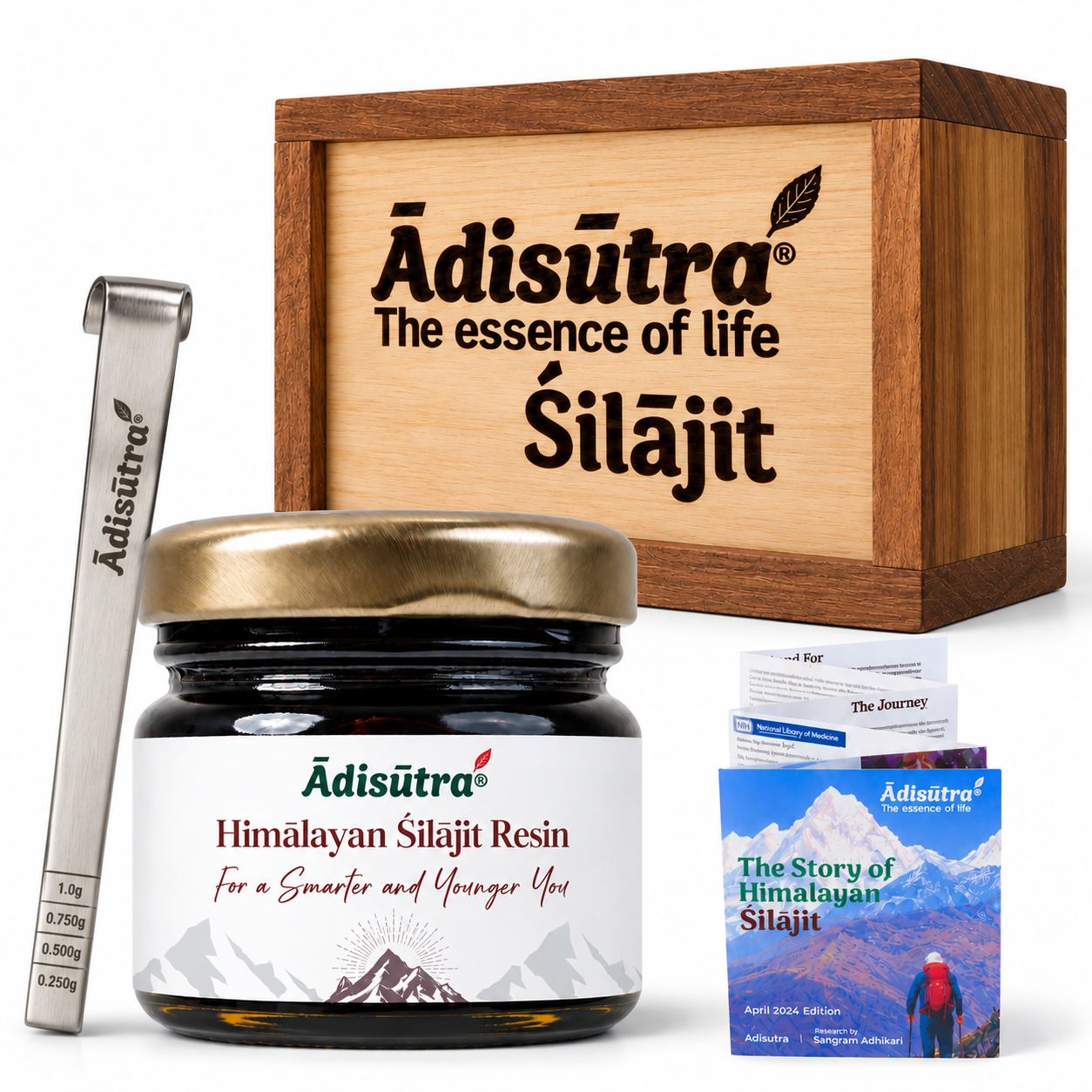
Himalayan Shilajit Resin

Pure Resin · 10g · 20g · 30g

Authentic Himalayan Shilajit in its most potent resin form — naturally rich in fulvic acid and 85+ trace minerals. High-altitude sourced. Available in three sizes: a 10g trial size, 20g, and 30g. Also available in a French-market labelled SKU.

  • Boosts energy & reduces fatigue
  • Enhances physical endurance & strength
  • Improves focus & cognitive performance
  • Rich in fulvic acid & 85+ trace minerals
  • Available in 3 sizes: 10g trial, 20g, 30g
  • French-market labelled SKU available
10g Jar 20g Jar 30g Jar French Market SKU Trial Size High Repeat Purchase
Spec: Pure Himalayan Resin (not powder) · High Fulvic Acid Content · 85+ Trace Minerals · Zero Additives or Fillers
Packaging: 10g Trial Jar · 20g Jar · 30g Jar, French-market labelled SKU available (30g)
MOQ: 10g / 20g / 30g — 10 units per order
Pricing (RRP / EXW / DDP Incoterms):
VariantRRPEXWDDP
10g$45 USD
€45 EUR
£45 GBP
د.إ165 AED
$12 USD
€10 EUR
£9 GBP
د.إ44 AED
$15 USD
€13 EUR
£11 GBP
د.إ55 AED
20g$75 USD
€75 EUR
£65 GBP
د.إ275 AED
$20 USD
€17 EUR
£15 GBP
د.إ73 AED
$25 USD
€22 EUR
£19 GBP
د.إ92 AED
30g$95 USD
€95 EUR
£85 GBP
د.إ355 AED
$25 USD
€22 EUR
£19 GBP
د.إ92 AED
$35 USD
€30 EUR
£26 GBP
د.إ129 AED
SKU: ADIS-SHI-10 / ADIS-SHI-20 / ADIS-SHI-30 · MOQ 10 units

Clinical Research & Evidence for Himalayan Shilajit Resin

Evidence strength

Emerging, level 2 of 4 (Traditional, Emerging, Moderate, Strong)

Clinically studied as purified Shilajit extract in 2 RCTs (63 participants in Keller 2019), supported by 2 open-label clinical studies and a safety review.

How evidence strength is rated
Strong
Several independent RCTs or a meta-analysis on the same standardization at a comparable dose, with consistent results.
Moderate
Two or more placebo- or active-controlled RCTs on the ingredient at a comparable standardization, or a meta-analysis at botanical level.
Emerging
Early human studies, including studies on a related form of the ingredient.
Traditional
Backed by traditional use, observational data or animal research.
Human RCTs
2
Participants in RCTs
63
Other studies
2 open-label studies · 1 review
Ingredients covered
  • Shilajit

Evidence note

Clinically studied as purified Shilajit extract. The human studies used purified, processed or standardized extracts, mostly PrimaVie from Natreon, at 200-500 mg/day for 8-12 weeks, and report results on testosterone, strength retention, muscle extracellular-matrix genes and sperm parameters. Fulvic acid % on the CoA, together with heavy-metal testing, is the quality marker for this Himalayan resin.

Match to this product: Exact ingredient Related extract Supporting research

Shilajit

5 studies
  • Pandit et al. (2016)

    Total testosterone, free testosterone and DHEAS increased significantly versus placebo (P<0.05), while LH and FSH remained within the normal range.

    • RCT, double-blind
    • Men aged 45-55
    • 250 mg twice daily
    • 90 days
    Full summary

    A randomized, double-blind, placebo-controlled trial in healthy men aged 45-55 tested purified Shilajit at 250 mg twice daily for 90 days. Total testosterone, free testosterone and DHEAS increased significantly versus placebo (P<0.05), while LH and FSH remained within the normal range.

  • Keller et al. (2019)

    At 500 mg/d, participants retained more maximal strength after a fatigue protocol (MVIC decline 8.9% vs 16.0% placebo, p=0.044) and had lower baseline serum hydroxyproline (1.5 vs 2.4 ug/mL, p=0.024).

    • RCT, 3 arms
    • n=63
    • 250 or 500 mg/d
    • 8 weeks
    Full summary

    A randomized, placebo-controlled, three-arm trial in 63 recreationally active men (21 per arm) compared PrimaVie Shilajit at 250 mg/d or 500 mg/d for 8 weeks. At 500 mg/d, participants retained more maximal strength after a fatigue protocol (MVIC decline 8.9% vs 16.0% placebo, p=0.044) and had lower baseline serum hydroxyproline (1.5 vs 2.4 ug/mL, p=0.024). Both results were reported in the upper-50th-percentile subgroup.

  • Das et al. (2016)

    Seventeen extracellular-matrix genes were upregulated in muscle, including collagen, elastin, fibronectin and decorin.

    • Open-label, single-arm
    • 250 mg twice daily
    • 8 + 4 weeks
    • 17 ECM genes
    Full summary

    An open-label, single-arm clinical study with muscle biopsies (NCT02026414) in overweight and class I obese adults used purified, standardized Shilajit at 250 mg twice daily for 8 weeks, followed by 4 further weeks combined with exercise. Seventeen extracellular-matrix genes were upregulated in muscle, including collagen, elastin, fibronectin and decorin. The supplement was well tolerated; glucose, lipids, CK and myoglobin remained stable.

  • Biswas et al. (2010)

    Total sperm count rose 61.4%, motility 12.4-17.4% and serum testosterone 23.5% (P<0.001), while semen MDA fell 18.7%.

    • Open-label, before-and-after
    • n=35 (28 completed)
    • 100 mg twice daily
    • 90 days
    Full summary

    An open-label, before-and-after study enrolled 35 oligospermic men (28 completed) on processed Shilajit at 100 mg twice daily for 90 days. Total sperm count rose 61.4%, motility 12.4-17.4% and serum testosterone 23.5% (P<0.001), while semen MDA fell 18.7%. Liver and kidney markers remained stable.

  • Stohs (2014)

    Shilajit · Supporting research (review)

    A narrative review concluded that animal and human data support the safety of Shilajit, with reported antioxidant, anti-inflammatory, adaptogenic, spermatogenic and anti-fatigue effects attributed to fulvic acid and dibenzo-alpha-pyrones.

    • Narrative review
    • Safety overview
    Full summary

    A narrative review concluded that animal and human data support the safety of Shilajit, with reported antioxidant, anti-inflammatory, adaptogenic, spermatogenic and anti-fatigue effects attributed to fulvic acid and dibenzo-alpha-pyrones.

    View study: Stohs (2014), opens in a new tab

    Phytother Res 2014;28(4):475-9

Food

Traditional Food

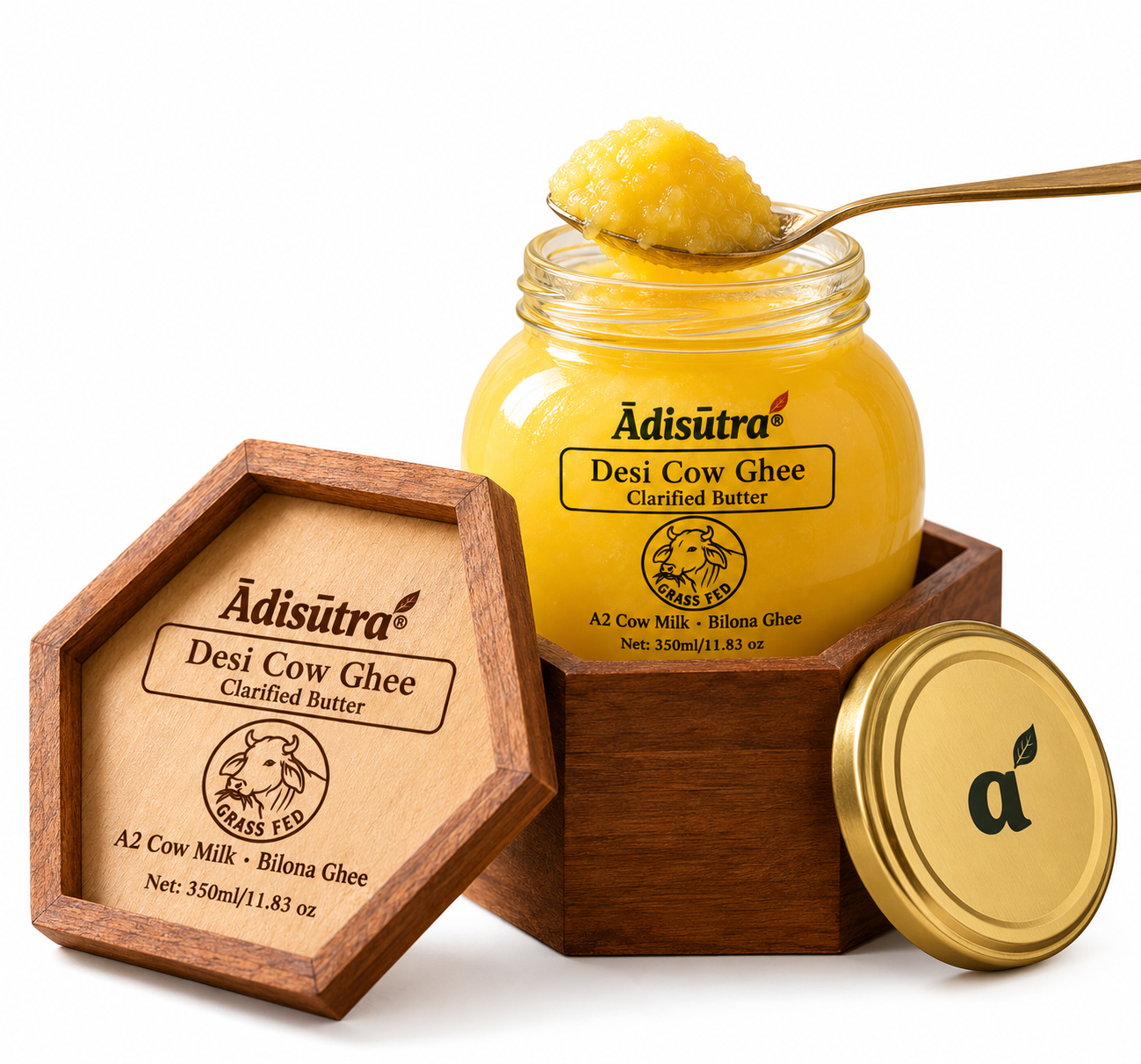
Desi Cow Ghee

A2 Milk · Bilona Churned · 350ml

Crafted using the traditional Bilona method from A2 cow milk of grass-fed cows. Pure clarified butter with no additives, no preservatives — the way Ayurveda intended for 5000 years.

  • A2 Cow Milk — easier to digest
  • Traditional Bilona hand-churning method
  • Grass-fed cows for richer nutrient profile
  • Zero additives & zero preservatives
Grass-Fed A2 Milk No Preservatives
Spec: Volume: 350ml / 11.83oz · Source: A2 Cow Milk · Method: Bilona Churned · Preservatives: None
Packaging: 350ml glass jar
MOQ: 10 units
RRP: $55 USD | €55 EUR | £55 GBP | د.إ85 AED
DDP: $13 USD | €12 EUR | £10 GBP | د.إ58 AED
SKU: ADIS-GHE-350 · MOQ 10 units

Clinical Research & Evidence for Desi Cow Ghee

Evidence strength

Traditional, level 1 of 4 (Traditional, Emerging, Moderate, Strong)

Backed by traditional Ayurvedic use, with A2 beta-casein milk studies supporting A2 sourcing and a community survey of 1,982 men on ghee intake.

How evidence strength is rated
Strong
Several independent RCTs or a meta-analysis on the same standardization at a comparable dose, with consistent results.
Moderate
Two or more placebo- or active-controlled RCTs on the ingredient at a comparable standardization, or a meta-analysis at botanical level.
Emerging
Early human studies, including studies on a related form of the ingredient.
Traditional
Backed by traditional use, observational data or animal research.
Human RCTs
2A2 beta-casein milk studies
Participants in RCTs
86
Other studies
1 observational study (n=1,982) · 1 animal study · 1 review
Ingredients covered
  • A2 beta-casein milk (sourcing)
  • Ghee

Evidence note

Desi Cow Ghee is backed by traditional Ayurvedic use. Two randomized crossover trials of A2 beta-casein milk (Ho 2014, Jianqin 2016; 86 participants) and a review (Pal 2015) support the A2 sourcing of desi cattle. Ghee-specific research includes a community survey of 1,982 men in rural Rajasthan (Gupta 1997) and an animal study with literature review on moderate dietary ghee (Sharma 2010). "From A2 (desi) cows" describes the sourcing and provenance of this ghee.

Match to this product: Exact ingredient Related extract Supporting research

A2 milk and A2 sourcing

3 studies
  • Ho et al. (2014)

    A2 milk · Supporting research (A2 milk study)

    A1 milk produced significantly higher Bristol stool values, and abdominal pain correlated with stool consistency on A1 (r=0.52, P=0.001) but not on A2.

    • Crossover RCT (pilot)
    • n=41
    • 750 mL/day milk
    • 8 weeks total
    Full summary

    A double-blind, randomized crossover pilot in 41 adults compared 750 mL/day of A1 versus A2 milk for 2 weeks each, with 2-week washouts (8 weeks total). A1 milk produced significantly higher Bristol stool values, and abdominal pain correlated with stool consistency on A1 (r=0.52, P=0.001) but not on A2.

    View study: Ho et al. (2014), opens in a new tab

    Eur J Clin Nutr 2014;68(9):994-1000

  • Jianqin et al. (2016)

    A2 milk · Supporting research (A2 milk study)

    A1+A2 milk was associated with more post-dairy digestive discomfort, higher inflammatory markers and BCM-7, longer GI transit, lower SCFA, and slower, less accurate cognitive test results.

    • Crossover RCT
    • n=45
    • A2 vs A1+A2 milk
    • 14 days per arm
    Full summary

    A double-blind, randomized 2x2 crossover trial (NCT02406469) in 45 Han Chinese adults with self-reported milk intolerance compared A2-only milk with A1+A2 milk for 14 days each, with 14-day washouts. A1+A2 milk was associated with more post-dairy digestive discomfort, higher inflammatory markers and BCM-7, longer GI transit, lower SCFA, and slower, less accurate cognitive test results. Symptoms with A2-only milk remained comparable to baseline.

  • Pal et al. (2015)

    A2 sourcing · Supporting research (review)

    A review reports that A1 (not A2) beta-casein releases BCM-7, which acts on mu-opioid receptors in the gut, and that rodent and human data link A1 to milk intolerance. This supports the A2 sourcing of desi cattle.

    • Review
    • A2 sourcing
    Full summary

    A review reports that A1 (not A2) beta-casein releases BCM-7, which acts on mu-opioid receptors in the gut, and that rodent and human data link A1 to milk intolerance. It also states that purebred Asian and African cattle produce A2. This supports the A2 sourcing of desi cattle.

Ghee

2 studies
  • Gupta & Prakash (1997)

    Ghee · Observational

    Higher ghee intake was associated with lower CHD prevalence (OR 0.23, 95% CI 0.18-0.30, p<0.001); hypertension and other risk factors were similar between groups.

    • Cross-sectional
    • n=1,982
    • ≥1 kg ghee/month
    Full summary

    A community cross-sectional survey in rural Rajasthan of 1,982 men aged 20 and over compared those eating at least 1 kg ghee/month (n=782) with those eating less (n=1,200). Higher ghee intake was associated with lower CHD prevalence (OR 0.23, 95% CI 0.18-0.30, p<0.001); hypertension and other risk factors were similar between groups.

    View study: Gupta & Prakash (1997), opens in a new tab

    J Indian Med Assoc 1997;95(3):67-9, 83

  • Sharma et al. (2010)

    Ghee · Animal data + review

    An animal study in Fischer rats with a literature review found that serum total cholesterol and liver microsomal lipid peroxidation remained unchanged with 10% dietary ghee for 4 weeks.

    • Animal + review
    • 10% dietary ghee
    • 4 weeks
    Full summary

    An animal study in Fischer rats with a literature review found that serum total cholesterol and liver microsomal lipid peroxidation remained unchanged with 10% dietary ghee for 4 weeks, while triglycerides increased. The review finds no evidence of harm from moderate ghee intake in the literature.

Metabolic

Metabolic Health

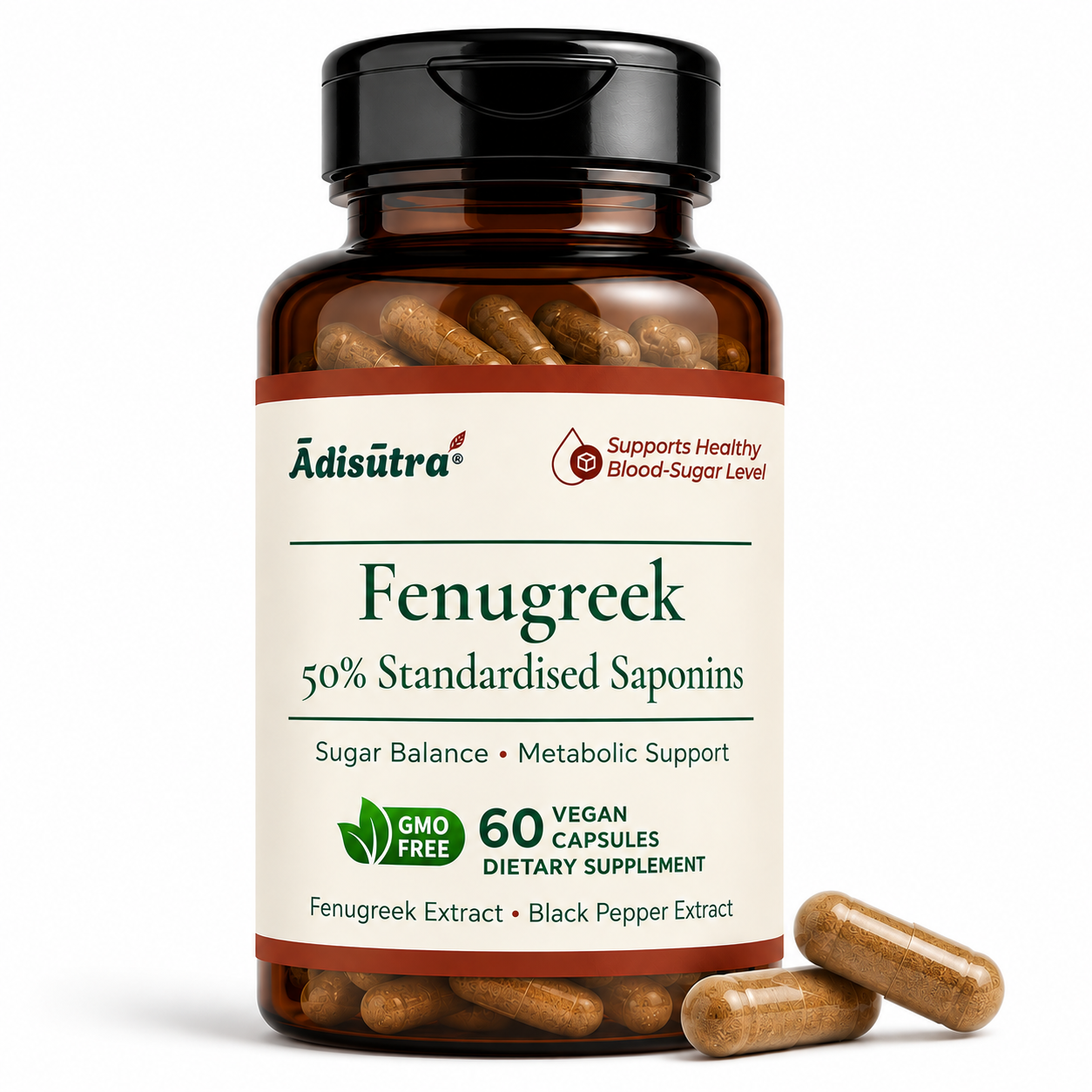
Fenugreek Capsules

High-Strength · 60 capsules

Research-backed fenugreek with peer-reviewed evidence across testosterone support, blood sugar regulation, and metabolic health. Six published journals cited on packaging.

  • Supports healthy testosterone in men
  • Regulates blood sugar & insulin sensitivity
  • Reduces post-meal glucose spikes
  • Supports heart health & weight management
Research-Backed Vegan GMO Free
Spec: High-strength Fenugreek Seed Extract · Standardised Active Compounds · Black Pepper (95%) for absorption
Packaging: 60 vegetarian capsules per bottle
MOQ: 10 units
RRP: $25 USD | €25 EUR | £20.50 GBP | د.إ91 AED
DDP: $11 USD | €10 EUR | £8 GBP | د.إ47 AED
SKU: ADIS-FEN-60 · MOQ 10 units

Clinical Research & Evidence for Fenugreek Capsules

Fenugreek seed extracts standardized to furostanolic saponins have been studied in randomized controlled trials for metabolic health and glycemic control.

Evidence strength

Moderate, level 3 of 4 (Traditional, Emerging, Moderate, Strong)

Moderate for blood-sugar outcomes; Emerging for testosterone.

A meta-analysis of 10 RCTs (706 participants) supports glycemic benefit at botanical level, and a close-standardization branded RCT (Fenfuro®) agrees.

How evidence strength is rated
Strong
Several independent RCTs or a meta-analysis on the same standardization at a comparable dose, with consistent results.
Moderate
Two or more placebo- or active-controlled RCTs on the ingredient at a comparable standardization, or a meta-analysis at botanical level.
Emerging
Early human studies, including studies on a related form of the ingredient.
Traditional
Backed by traditional use, observational data or animal research.
Human RCTs
2
Participants in RCTs
201
Other studies
2 meta-analyses (10 RCTs / 706 participants; 13 studies)
Ingredients covered
  • Fenugreek seed extract

Evidence note

At the label use of 2 capsules a day, this product provides 1,490 mg of fenugreek seed extract standardized to 50% saponins (745 mg saponins) plus 10 mg of 95% black pepper extract. The closest clinical match is Gupta et al. (2024), which used 1,000 mg/day of Fenfuro® (>45% furostanolic saponins) for 12 weeks. Rao et al. (2016) studied a standardized fenugreek seed extract (Testofen®) for aging-male symptoms, sexual function and testosterone.

Match to this product: Exact ingredient Related extract Supporting research

Fenugreek seed extract

4 studies
  • Gupta et al. (2024)

    In the treatment group, fasting and postprandial glucose fell by 38% and 44% and HbA1c by about 34.7%; C-peptide, TSH, liver, kidney and cardiovascular markers stayed normal and no adverse events were reported.

    • RCT, double-blind
    • n=81
    • >45% furostanolic saponins
    • 1,000 mg/day
    • 12 weeks
    Full summary

    A randomized, double-blind, placebo-controlled trial in adults with type 2 diabetes already taking metformin or metformin with a sulfonylurea (42 analyzed on treatment, 39 on placebo) tested Fenfuro® fenugreek seed extract containing >45% furostanolic saponins by HPLC at 1,000 mg/day (500 mg × 2) for 12 weeks. In the treatment group, fasting and postprandial glucose fell by 38% and 44% and HbA1c by about 34.7%; C-peptide, TSH, liver, kidney and cardiovascular markers stayed normal and no adverse events were reported.

  • Kim et al. (2023)

    A systematic review and meta-analysis of 10 randomized controlled trials (706 participants) found that fenugreek significantly reduced fasting blood glucose, 2-hour post-load glucose and HbA1c.

    • Meta-analysis
    • 10 RCTs
    • 706 participants
    Full summary

    A systematic review and meta-analysis of 10 randomized controlled trials (706 participants) found that fenugreek significantly reduced fasting blood glucose, 2-hour post-load glucose and HbA1c, while HOMA-IR was unchanged. It also improved total cholesterol, triglycerides and HDL-C, while LDL-C and BMI were unchanged. No liver or kidney toxicity or severe adverse events were reported; some studies noted mild gastrointestinal effects.

    View study: Kim et al. (2023), opens in a new tab

    Int J Mol Sci 2023;24(18):13999

  • Rao et al. (2016)

    Aging Male Symptom scores fell versus placebo, sexual function improved, and total and free serum testosterone increased compared with placebo.

    • RCT, double-blind
    • n=120
    • 600 mg/day
    • 12 weeks
    Full summary

    A double-blind, randomized, placebo-controlled trial in 120 healthy men aged 43-70 tested a standardized fenugreek seed extract (Testofen®) at 600 mg/day for 12 weeks. Aging Male Symptom scores fell versus placebo, sexual function improved, and total and free serum testosterone increased compared with placebo.

  • Yang et al. (2026)

    A systematic review and meta-analysis of randomized placebo-controlled trials in adult men (13 studies) found a small favorable association with total testosterone (SMD 0.25, 95% CI 0.02-0.48) but no stable effect on free testosterone. The authors rated the certainty of evidence as very low.

    • Meta-analysis
    • 13 studies
    • SMD 0.25
    • Very low certainty
    Full summary

    A systematic review and meta-analysis of randomized placebo-controlled trials in adult men (13 studies) found a small favorable association with total testosterone (SMD 0.25, 95% CI 0.02-0.48) but no stable effect on free testosterone. No included study was judged at low risk of bias, and the authors rated the certainty of evidence as very low, concluding that current evidence does not support testosterone-boosting claims.

Women's

Women's Wellness

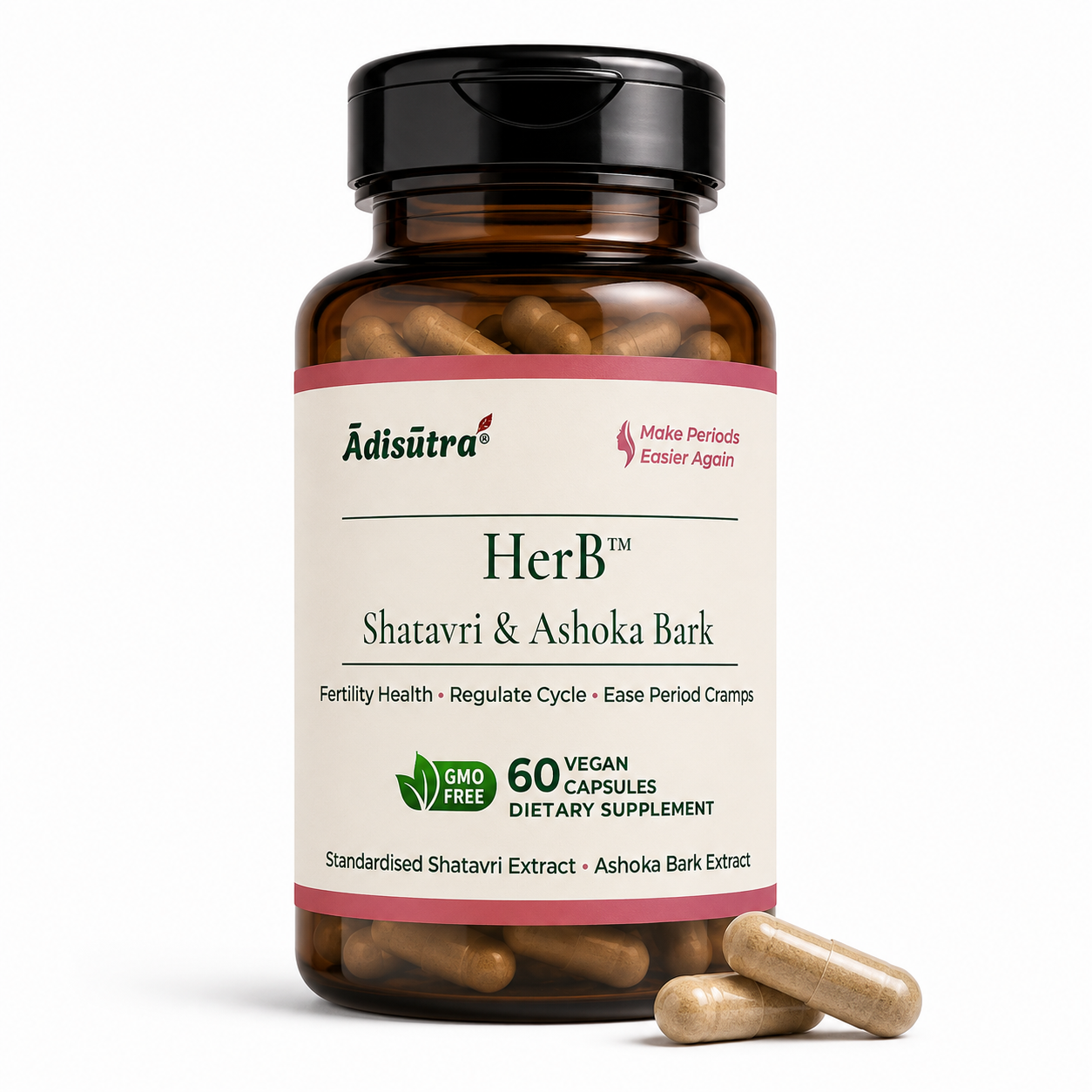
HerB™

Shatavri & Ashoka Bark · 60 capsules

A women's Ayurvedic formula combining Shatavri — the queen of herbs — with Ashoka Bark in standardised, GMO-free, vegan capsules. Quad-action Shatavri: powder, 5%, and 40% extract in one capsule.

  • Supports hormonal balance & regularity
  • Promotes reproductive wellness
  • Supports healthy uterine function
  • Rich in natural phytoestrogens
Vegan GMO Free Standardised Extracts
Spec: Per capsule: Shatavri Root Powder 295 mg · Ashoka Bark Extract (5% Tannins) 200 mg · Shatavri 5% Extract (Shatavarins I–IV) 125 mg · Shatavri 40% Extract (40% Saponins) 125 mg · Black Pepper Extract (95%) 5 mg
Packaging: 60 vegan HPMC capsules per bottle
MOQ: 10 units
RRP: $35 USD | €35 EUR | £35 GBP | د.إ131 AED
DDP: $15 USD | €13 EUR | £11 GBP | د.إ63 AED
SKU: ADIS-HRB-60 · MOQ 10 units

Clinical Research & Evidence for HerB™

Multiple randomized controlled trials support the use of standardized Shatavari root extracts for women's hormonal and menopausal wellness.

Evidence strength

Moderate, level 3 of 4 (Traditional, Emerging, Moderate, Strong)

Moderate for Shatavari; Ashoka is backed by traditional Ayurvedic use.

Supported by 6 double-blind RCTs with 554 participants, all published 2024-2026, including 2 on the same 5% total-shatavarin standardization.

How evidence strength is rated
Strong
Several independent RCTs or a meta-analysis on the same standardization at a comparable dose, with consistent results.
Moderate
Two or more placebo- or active-controlled RCTs on the ingredient at a comparable standardization, or a meta-analysis at botanical level.
Emerging
Early human studies, including studies on a related form of the ingredient.
Traditional
Backed by traditional use, observational data or animal research.
Human RCTs
62 on the same 5% standardization (284 participants)
Participants in RCTs
554
Other studies
None
Ingredients covered
  • Shatavari root extract
Traditional Ayurvedic use
  • Ashoka bark (Saraca asoca)

Evidence note

At the label use of 2 capsules a day, HerB™ provides 250 mg of 5% Shatavarin extract (the same standardization and daily dose as the ARova5X trial), 250 mg of 40% Shatavari extract, 590 mg of Shatavari root powder, 400 mg of Ashoka bark extract (5% tannins) and 10 mg of 95% black pepper extract. The Gudise et al. trial used the same 5% standardization at 500 mg/day. SRI-81 (>10% total Shatavarins) and SheVari4® are related Shatavari root extracts that add further clinical support. For Ashoka bark, traditional Ayurvedic use supports its historical role in women's wellness formulations.

Match to this product: Exact ingredient Related extract Supporting research

Shatavari (Asparagus racemosus)

6 studies
  • Mishra et al. (2026) · ARova5X

    Shatavari 5% extract · Exact match (standardization and daily dose)

    Versus placebo, the extract improved sexual-function domains including desire, arousal and satisfaction; vaginal lubrication improved by 84.11% in the extract group versus 13.08% on placebo, and oxidative-stress markers and menopausal symptoms such as hot flashes, fatigue and irritability also improved.

    • RCT, double-blind
    • n=214
    • 5% shatavarins
    • 250 mg/day
    • 90 days
    Full summary

    A randomized, double-blind, placebo-controlled trial in 214 postmenopausal women (107 per group) tested a hydroalcoholic Shatavari root extract standardized to 5% shatavarins at 250 mg/day for 90 days. Versus placebo, the extract improved sexual-function domains including desire, arousal and satisfaction; vaginal lubrication improved by 84.11% in the extract group versus 13.08% on placebo, and oxidative-stress markers and menopausal symptoms such as hot flashes, fatigue and irritability also improved. The authors report no affiliation with the extract's maker.

  • Gudise et al. (2024) · Aspurūs™

    Shatavari 5% extract · Exact standardization (500 mg/day)

    Compared with placebo, the extract reduced hot flashes, night sweats, insomnia, anxiety, nervousness, vaginal dryness and loss of libido, and improved Utian quality-of-life scores, with no significant adverse events.

    • RCT, double-blind
    • n=70
    • 5% total Shatavarins
    • 500 mg/day
    • 60 days
    Full summary

    A double-blind, multicenter, randomized, placebo-controlled trial in 70 women aged 40-65 with menopausal symptoms used a Shatavari root extract standardized to 5% total Shatavarins (HPTLC) at 250 mg twice daily (500 mg/day) for 60 days. Compared with placebo, the extract reduced hot flashes, night sweats, insomnia, anxiety, nervousness, vaginal dryness and loss of libido, and improved Utian quality-of-life scores, with no significant adverse events.

  • Mahajan et al. (2025) · SRI-81

    The extract significantly improved Menopause Rating Scale domains, perceived stress and hot flashes versus placebo; estradiol, FSH and T3 levels rose, and no adverse effects on liver or kidney function were observed.

    • RCT, double-blind
    • n=80
    • >10% Shatavarins
    • 300 mg/day
    • 8 weeks
    Full summary

    A randomized, double-blind, placebo-controlled trial in 80 perimenopausal women (73 per-protocol) tested 300 mg/day of SRI-81 Shatavari root extract, standardized to >10% total Shatavarins, for 8 weeks. The extract significantly improved Menopause Rating Scale domains, perceived stress and hot flashes versus placebo; estradiol, FSH and T3 levels rose, and no adverse effects on liver or kidney function were observed.

  • Mhatre et al. (2026) · SRI-81

    Versus placebo, it reduced perceived stress and follicular count and increased endometrial thickness, and no serious adverse events occurred.

    • RCT, double-blind
    • n=70
    • >10% Shatavarins
    • 300 mg/day
    • 12 weeks
    Full summary

    A randomized, double-blind, placebo-controlled trial in 70 women aged 20-40 with PCOS (66 completed) tested 300 mg/day of SRI-81 Shatavari root extract for 12 weeks. Versus placebo, it reduced perceived stress and follicular count and increased endometrial thickness; ovarian volume, BMI, hormone levels and other laboratory values were similar between groups, and no serious adverse events occurred.

    View study: Mhatre et al. (2026) · SRI-81, opens in a new tab

    Front Endocrinol (Lausanne) 2026;17:1769773

  • Chattopadhyay et al. (2026) · SheVari4®

    Menopause-specific quality of life (MENQOL) improved by 42.8% versus placebo across vasomotor, psychosocial, physical and sexual domains; estradiol rose 36.44% while FSH fell 38.18% and cortisol 26.87%.

    • RCT, double-blind
    • n=60
    • 100 mg/day
    • 8 weeks
    Full summary

    A randomized, double-blind, placebo-controlled trial in 60 pre-, peri- and post-menopausal women tested 100 mg/day of the proprietary Shatavari root extract SheVari4® for 8 weeks. Menopause-specific quality of life (MENQOL) improved by 42.8% versus placebo across vasomotor, psychosocial, physical and sexual domains; estradiol rose 36.44% while FSH fell 38.18% and cortisol 26.87%.

  • Swaroop & Swaroop (2026) · SheVari4®

    In the SheVari4® group, Menopause Rating Scale scores fell 43% by week 4 and 71% by week 8, a significant difference from placebo (p<0.001), with adverse events mild and comparable between groups.

    • RCT, double-blind
    • n=60
    • 100 mg/day
    • 8 weeks
    Full summary

    A randomized, double-blind, placebo-controlled trial in 60 healthy women aged 40-55 tested 100 mg/day of SheVari4® Shatavari root extract. In the SheVari4® group, Menopause Rating Scale scores fell 43% by week 4 and 71% by week 8, a significant difference from placebo (p<0.001), with adverse events mild and comparable between groups.

Nootropic

Brain & Memory

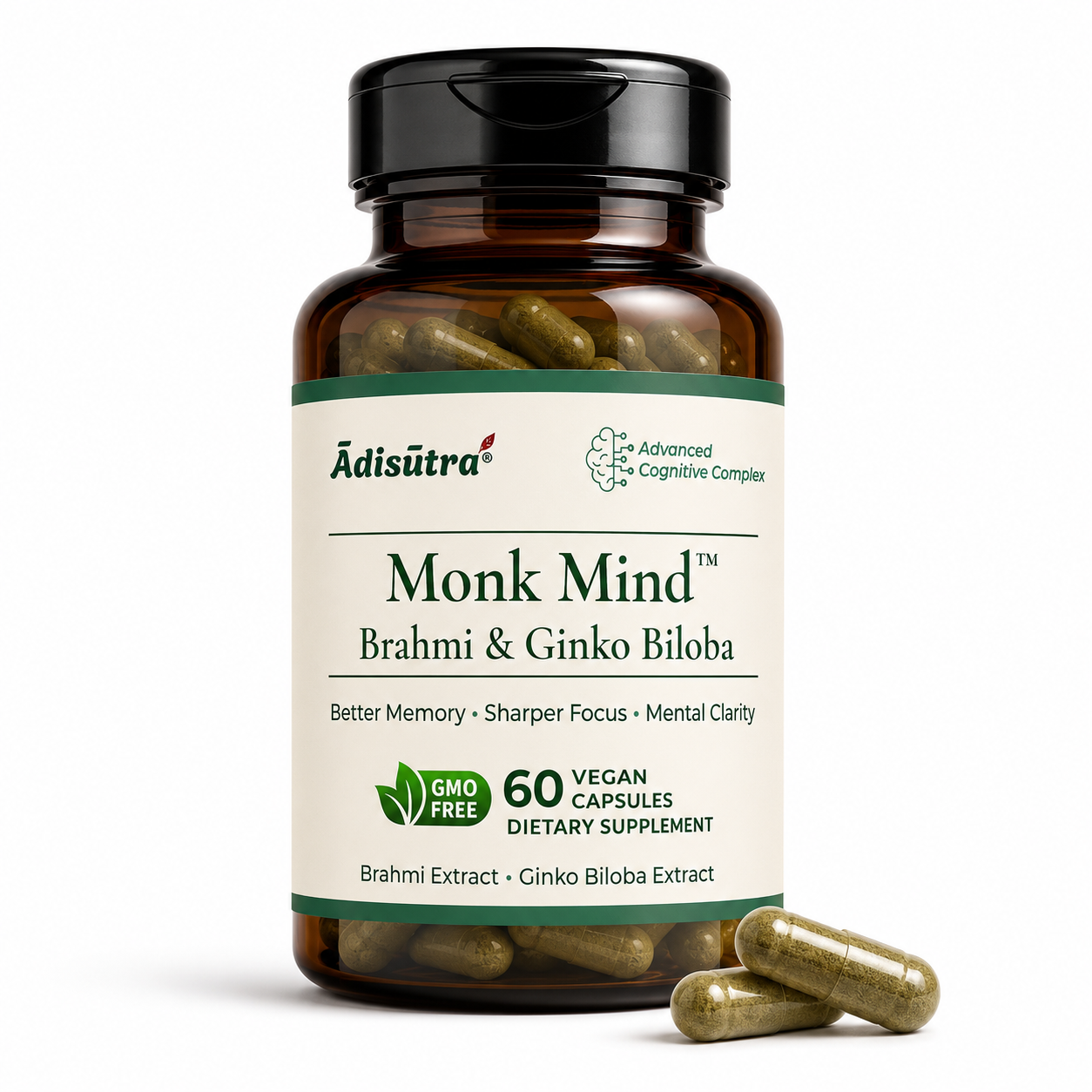
Monk Mind

Brahmi + Ginkgo Biloba · 60 capsules

A precision nootropic: 200 mg Brahmi at 25% Bacosides plus 120 mg Ginkgo (24% Flavones & 6% Lactones) — one capsule per day for meaningful cognitive support.

  • Supports memory retention & recall
  • Enhances focus & concentration
  • Promotes mental clarity under stress
  • Supports healthy cognitive ageing
Vegan 1 Cap per Day Dual-Brahmi Formula
Spec: Per capsule (750 mg): Brahmi Leaf Powder (Bacopa monnieri) 425 mg · Brahmi Extract (25% Bacosides) 200 mg · Ginkgo Biloba Extract (24F / 6L) 120 mg · Black Pepper Extract (95%) 5 mg
Packaging: 60 vegan capsules per bottle · 1 capsule per day
MOQ: 10 units
RRP: $35 USD | €35 EUR | £31 GBP | د.إ125 AED
DDP: $18 USD | €16 EUR | £13 GBP | د.إ76 AED
SKU: ADIS-MM-60 · MOQ 10 units

Clinical Research & Evidence for Monk Mind

Multiple randomized controlled trials support the cognitive benefits of standardized Bacopa extracts.

Evidence strength

Moderate, level 3 of 4 (Traditional, Emerging, Moderate, Strong)

Moderate for Brahmi. Ginkgo results vary by population, with benefits reported in people with dementia.

7 RCTs with 3,928 participants have studied these ingredients. Bacopa has a meta-analysis plus several RCTs on standardized extracts, and the Ginkgo 24/6 profile matches the cited trials.

How evidence strength is rated
Strong
Several independent RCTs or a meta-analysis on the same standardization at a comparable dose, with consistent results.
Moderate
Two or more placebo- or active-controlled RCTs on the ingredient at a comparable standardization, or a meta-analysis at botanical level.
Emerging
Early human studies, including studies on a related form of the ingredient.
Traditional
Backed by traditional use, observational data or animal research.
Human RCTs
7
Participants in RCTs
3,928
Other studies
1 meta-analysis (9 RCTs / 518) · 1 systematic review
Ingredients covered
  • Brahmi (Bacopa monnieri): 3 RCTs · 241 participants
  • Ginkgo biloba: 4 RCTs · 3,687 participants

Evidence note

Each capsule provides 200 mg of Brahmi extract standardized to 25% bacosides (50 mg bacosides), 425 mg of Brahmi leaf powder, 120 mg of Ginkgo extract (24% flavone glycosides / 6% terpene lactones) and 5 mg of 95% black pepper extract. The cited Bacopa trials used standardized extracts: 90 mg/day of bacosides in Eraiah et al. (30% extract) and about 150 mg/day or more in Calabrese et al. and Stough et al. (50-55% extracts). The Ginkgo 24/6 profile matches the cited trials, most of which used 240 mg/day, with benefits reported in people with dementia using EGb 761®.

Match to this product: Exact ingredient Related extract Supporting research

Brahmi (Bacopa monnieri)

5 studies
  • Eraiah et al. (2024) · B-Lit

    Versus placebo, the extract improved several memory measures (verbal and spatial short-term, working and episodic memory) and cognitive skills such as concentration, alertness, reasoning and mental flexibility; anxiety and sleep quality also improved, serum cortisol fell and BDNF rose.

    • RCT, double-blind
    • n=80
    • 30% bacosides
    • 300 mg/day
    • 84 days
    Full summary

    A randomized, double-blind, placebo-controlled trial in 80 healthy adults (74 completed) tested 300 mg/day of a Bacopa extract standardized to 30% total bacosides (90 mg bacosides) for 84 days. Versus placebo, the extract improved several memory measures (verbal and spatial short-term, working and episodic memory) and cognitive skills such as concentration, alertness, reasoning and mental flexibility; anxiety and sleep quality also improved, serum cortisol fell and BDNF rose. Sustained attention and planning were unchanged.

  • Calabrese et al. (2008)

    Versus placebo, Bacopa improved delayed word recall and Stroop performance, and depression and anxiety scores and heart rate fell.

    • RCT, double-blind
    • n=54
    • ≥50% bacosides
    • 300 mg/day
    • 12 weeks
    Full summary

    A randomized, double-blind, placebo-controlled trial in 54 adults aged 65 and over without dementia (48 completed) tested 300 mg/day of a Bacopa extract standardized to at least 50% bacosides A and B for 12 weeks. Versus placebo, Bacopa improved delayed word recall and Stroop performance, and depression and anxiety scores and heart rate fell; attention-task, working-memory, mood and blood-pressure measures were unchanged. The extract was well tolerated, with mainly mild stomach upset.

    View study: Calabrese et al. (2008), opens in a new tab

    J Altern Complement Med 2008;14(6):707-13

  • Stough et al. (2008) · KeenMind® (CDRI 08)

    The Bacopa group improved on the working-memory factor, specifically spatial working-memory accuracy, and made fewer false-positive errors on a rapid visual information-processing task.

    • RCT, double-blind
    • n=107
    • ≥55% bacosides
    • 300 mg/day
    • 90 days
    Full summary

    A double-blind, placebo-controlled randomized trial recruited 107 healthy adults (62 completed) and gave 2 × 150 mg/day of KeenMind® (CDRI 08), an extract standardized to not less than 55% bacosides, for 90 days. The Bacopa group improved on the working-memory factor, specifically spatial working-memory accuracy, and made fewer false-positive errors on a rapid visual information-processing task.

  • Kongkeaw et al. (2014)

    Pooled data from 437 participants showed faster Trail B performance (-17.9 ms) and shorter choice reaction time (10.6 ms), suggesting Bacopa may improve cognition, particularly speed of attention.

    • Meta-analysis
    • 9 RCTs
    • 518 participants
    Full summary

    A meta-analysis of randomized, placebo-controlled trials of standardized Bacopa extracts taken for at least 12 weeks included 9 studies with 518 participants. Pooled data from 437 participants showed faster Trail B performance (-17.9 ms) and shorter choice reaction time (10.6 ms), suggesting Bacopa may improve cognition, particularly speed of attention.

    View study: Kongkeaw et al. (2014), opens in a new tab

    J Ethnopharmacol 2014;151(1):528-35

  • Pase et al. (2012)

    A systematic review of 6 randomized controlled trials, all lasting 12 weeks and using three different Bacopa extracts at 300-450 mg/day, found that Bacopa improved 9 of 17 memory free-recall tests.

    • Systematic review
    • 6 RCTs
    • 300-450 mg/day
    View study: Pase et al. (2012), opens in a new tab

    J Altern Complement Med 2012;18(7):647-52

Ginkgo biloba (24% flavone glycosides / 6% terpene lactones)

4 studies

The 24% flavone glycosides / 6% terpene lactones standardization is a widely studied profile in clinical literature.

  • Dodge et al. (2008)

    Ginkgo · Exact standardization (24/6)

    A secondary analysis adjusted for adherence showed lower risk of progression to mild impairment (HR 0.33, p=0.02).

    • RCT pilot, double-blind
    • n=118
    • 24% / 6%
    • 240 mg/day
    • 42 months
    Full summary

    A randomized, double-blind, placebo-controlled 42-month pilot trial in 118 cognitively intact adults aged 85 and older tested 240 mg/day of a Ginkgo extract independently verified to contain at least 24% flavone glycosides and 6% terpene lactones. The main intention-to-treat analysis reported p=0.06 for progression to mild impairment and p=0.05 for memory decline. A secondary analysis adjusted for adherence showed lower risk of progression to mild impairment (HR 0.33, p=0.02). Ischemic strokes and TIAs were recorded more often in the Ginkgo group (p=0.01).

    View study: Dodge et al. (2008), opens in a new tab

    Neurology 2008;70(19 Pt 2):1809-17

  • DeKosky et al. (2008) · GEM Study

    The trial reported hazard ratios of 1.12 (P=.21) for all-cause dementia and 1.16 (P=.11) for Alzheimer disease, and adverse-effect profiles were similar to placebo.

    • RCT, double-blind
    • n=3,069
    • 240 mg/day
    • 6.1 years median
    Full summary

    The Ginkgo Evaluation of Memory randomized, double-blind, placebo-controlled trial followed 3,069 adults aged 75 and over with normal cognition or mild cognitive impairment for a median of 6.1 years on 120 mg of Ginkgo extract twice daily. The trial reported hazard ratios of 1.12 (P=.21) for all-cause dementia and 1.16 (P=.11) for Alzheimer disease, and adverse-effect profiles were similar to placebo.

  • Herrschaft et al. (2012) · EGb 761®

    Cognition (SKT) improved by 2.2 points versus 0.3 on placebo and neuropsychiatric scores (NPI) by 4.6 versus 2.1 (both p<0.001).

    • RCT, double-blind
    • n=410
    • 240 mg/day
    • 24 weeks
    Full summary

    A multicentre, double-blind, randomized, placebo-controlled 24-week trial in 410 outpatients with mild-to-moderate dementia and neuropsychiatric symptoms tested the branded extract EGb 761® at 240 mg once daily. Cognition (SKT) improved by 2.2 points versus 0.3 on placebo and neuropsychiatric scores (NPI) by 4.6 versus 2.1 (both p<0.001).

  • Demarin et al. (2017) · EGb 761®

    Ginkgo improved the Clinical Global Impression score versus placebo (P=0.038), and adverse reactions were less common than on placebo.

    • RCT, double-blind
    • n=90
    • 24% / 6%
    • 60-120 mg/day
    • 6 months
    Full summary

    A randomized, double-blind, placebo-controlled trial in 90 patients with vascular cognitive impairment compared 120 mg/day or 60 mg/day of EGb 761® (24% flavonol glycosides, 6% terpenes) with placebo for 6 months. Ginkgo improved the Clinical Global Impression score versus placebo (P=0.038), and adverse reactions were less common than on placebo.

Premium

Anti-Inflammatory

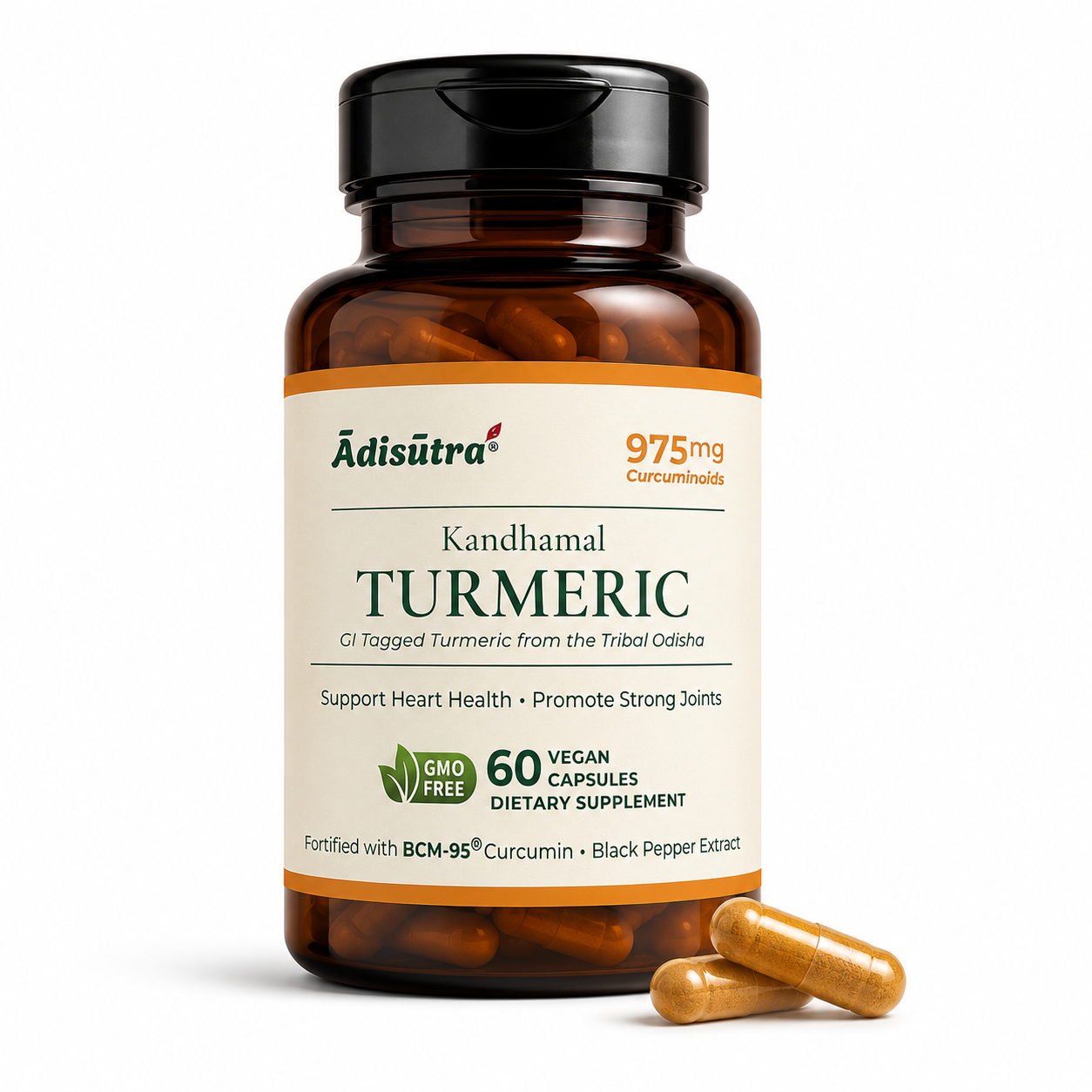
Kandhamal Turmeric

Curcugreen® BCM-95® · 60 capsules

GI-certified Kandhamal turmeric — India's most curcuminoid-rich variety — paired with patented BCM-95® extract for clinically superior bioavailability. 975 mg curcuminoids per serving.

  • 975 mg curcuminoids per serving
  • Supports joint health & mobility
  • Powerful antioxidant protection
  • Superior bioavailability vs standard turmeric
GI-Certified Origin BCM-95® Patented Vegan
Spec: Per serving (2 caps · 1500 mg): Kandhamal Turmeric 95% Extract 600 mg · Curcugreen® BCM-95® Extract 400 mg · Kandhamal Turmeric Powder 490 mg · Black Pepper Extract (95%) 10 mg
Packaging: 60 vegan capsules per bottle · 2 capsules per serving (30 servings)
MOQ: 10 units
RRP: $45 USD | €45 EUR | £35 GBP | د.إ155 AED
DDP: $18 USD | €16 EUR | £14 GBP | د.إ79 AED
SKU: ADIS-KD-60 · MOQ 10 units

Clinical Research & Evidence for Kandhamal Turmeric

Evidence strength

Moderate, level 3 of 4 (Traditional, Emerging, Moderate, Strong)

Moderate for the BCM-95® component. The 95% extract is characterized in pharmacokinetic studies.

The branded BCM-95® ingredient is supported by two active-controlled knee-OA RCTs and a human bioavailability study, with further pharmacokinetic research on the 95% extract and piperine.

How evidence strength is rated
Strong
Several independent RCTs or a meta-analysis on the same standardization at a comparable dose, with consistent results.
Moderate
Two or more placebo- or active-controlled RCTs on the ingredient at a comparable standardization, or a meta-analysis at botanical level.
Emerging
Early human studies, including studies on a related form of the ingredient.
Traditional
Backed by traditional use, observational data or animal research.
Human RCTs
3
Participants in RCTs
383Singhal counted as 144 completers
Other studies
5 pharmacokinetic studies
Ingredients covered
  • Curcugreen® BCM-95®
  • 95% curcuminoid extract
  • Black pepper (piperine)

Evidence note

Per 2-capsule serving this product contains 600 mg of 95% Kandhamal turmeric extract, 400 mg of Curcugreen® BCM-95®, 490 mg of Kandhamal turmeric powder and 10 mg of 95% black pepper extract. BCM-95® showed about 6.93-fold the relative bioavailability of normal curcumin. The standard 95% curcuminoid extract serves as the reference baseline in comparative bioavailability studies.

Match to this product: Exact ingredient Related extract Supporting research

Curcugreen® BCM-95®

3 studies
  • Antony et al. (2008) · BCM-95®

    BCM-95® · Exact branded ingredient (pharmacokinetics)

    The relative bioavailability of BCM-95® was about 6.93-fold that of normal curcumin and about 6.3-fold that of the curcumin-lecithin-piperine formula.

    • Crossover PK study
    • ~6.93× vs normal curcumin
    Full summary

    A pilot crossover study in human volunteers, with a two-week washout, compared blood curcumin after BCM-95®CG (Biocurcumax) with normal curcumin and with a curcumin-lecithin-piperine formula. The relative bioavailability of BCM-95® was about 6.93-fold that of normal curcumin and about 6.3-fold that of the curcumin-lecithin-piperine formula.

  • Singhal et al. (2021) · BCM-95®

    BCM-95® · Exact branded ingredient

    WOMAC scores were equivalent between groups; with BCM-95®, WOMAC pain improved 32.09% and total score 23.59%, and CRP and TNF-α fell 37.21% and 74.81%.

    • RCT vs paracetamol
    • n=144 completed
    • 1,000 mg/day
    • 6 weeks
    Full summary

    A randomized, non-inferiority trial in knee osteoarthritis compared BCM-95® 500 mg twice daily with paracetamol 650 mg three times daily for 6 weeks (71 and 73 patients completed). WOMAC scores were equivalent between groups; with BCM-95®, WOMAC pain improved 32.09% and total score 23.59%, and CRP and TNF-α fell 37.21% and 74.81%. Adverse events were mild and less frequent than with paracetamol (5.48% vs 12.68%).

  • Shep et al. (2019) · BCM-95®

    BCM-95® · Exact branded ingredient

    Pain and KOOS scores improved similarly in both groups, while adverse effects were less common with curcumin (13% vs 38%) and no curcumin patients needed H2 blockers, versus 28% on diclofenac.

    • RCT vs diclofenac, open-label
    • n=139
    • 1,500 mg/day
    • 28 days
    Full summary

    A randomized, open-label, active-controlled trial in 139 patients with knee osteoarthritis compared BCM-95® 500 mg three times daily with diclofenac 50 mg twice daily for 28 days. Pain and KOOS scores improved similarly in both groups, while adverse effects were less common with curcumin (13% vs 38%) and no curcumin patients needed H2 blockers, versus 28% on diclofenac.

95% curcuminoid extract

3 studies

This product uses a standard 95% curcuminoid extract, which serves as the reference baseline in comparative bioavailability studies.

  • Fança-Berthon et al. (2021)

    After dose normalization, total-curcuminoid exposure for the standard extract was 3.7 ng·h/mL/mg, versus 136 for a micellar preparation and 72.9 for a dried colloidal suspension.

    • Crossover PK study
    • n=30
    • Standard extract
    • 1,500 mg single dose
    Full summary

    A randomized, open-label crossover study in 30 healthy adults aged 18-45 compared a single 1,500 mg dose of standard turmeric extract with four other turmeric formulations. After dose normalization, total-curcuminoid exposure for the standard extract was 3.7 ng·h/mL/mg, versus 136 for a micellar preparation and 72.9 for a dried colloidal suspension. The piperine-curcuminoid combination performed similarly to the standard extract.

  • Stohs et al. (2018)

    Free curcumin peaked at 0.3 ng/mL with the 95% powder versus 2 ng/mL with the micellar product, whose absorbed curcumin per mg was 522 times higher.

    • Crossover PK study
    • n=12
    • 95% curcumin
    • 400 mg dose
    Full summary

    A randomized, double-blind crossover study in 12 healthy adults gave an equivalent 400 mg dose of unformulated 95% curcumin powder (323 mg curcumin) or a novel micromicellar formulation. Free curcumin peaked at 0.3 ng/mL with the 95% powder versus 2 ng/mL with the micellar product, whose absorbed curcumin per mg was 522 times higher.

    View study: Stohs et al. (2018), opens in a new tab

    J Am Coll Nutr 2018;37(1):51-59

  • Panahi et al. (2014)

    Curcuminoids lowered LDL-C, non-HDL-C, total cholesterol, triglycerides and Lp(a) and raised HDL-C more than placebo.

    • RCT
    • n=100
    • 1,000 mg/day + piperine
    • 8 weeks
    Full summary

    A randomized controlled trial in 100 patients with metabolic syndrome receiving standard care added 1,000 mg/day of curcuminoids (C3 Complex®) with piperine (100:1) or placebo for 8 weeks. Curcuminoids lowered LDL-C, non-HDL-C, total cholesterol, triglycerides and Lp(a) and raised HDL-C more than placebo.

    View study: Panahi et al. (2014), opens in a new tab

    Complement Ther Med 2014;22(5):851-7

Black pepper (piperine)

2 studies
  • Shoba et al. (1998)

    In healthy volunteers, 2 g of curcumin alone gave undetectable or very low serum levels, while adding 20 mg of piperine increased curcumin bioavailability by 2000%.

    • Human PK
    • 2 g curcumin + 20 mg piperine
    • +2000% (study conditions)
    • 10 mg extract per serving
  • Kroon et al. (2025)

    An independent comparison of three curcumin formulations recommends that bioavailability claims be based on unconjugated curcumin.

    • Crossover PK study
    • n=9
    • 3 formulations
    Full summary

    An independent crossover study in 9 healthy men tested three curcumin formulations, including a high dose with and without piperine. Plasma unconjugated curcumin stayed below 2 nM in most cases, with similar results with and without piperine. The authors conclude that bioavailability claims should be based on unconjugated curcumin.

Bestseller

Adaptogen

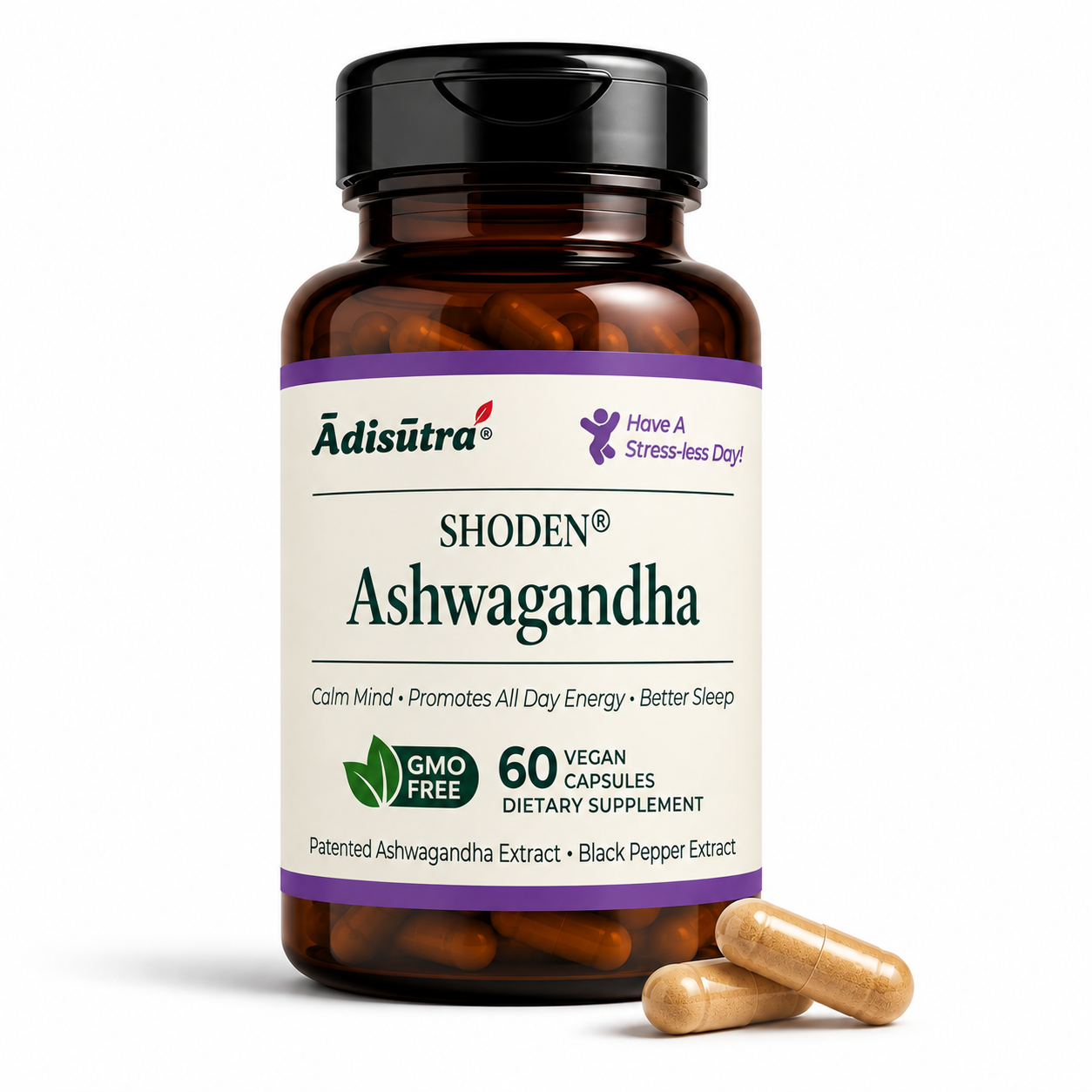
Shoden® Ashwagandha

Capsules · 60 count

The world's highest-potency ashwagandha extract — Shoden® standardised to 35% Withanolides — combined with full-spectrum root powder and BioPerine® for superior absorption.

  • Manages stress & cortisol levels
  • Promotes sustained all-day energy
  • Supports restful sleep quality
  • Enhances mental clarity & focus
Vegan GMO Free Patented Ingredient HPMC Capsule
Spec: Per serving: Ashwagandha Root Powder 1340 mg · Shoden® Extract (35% Withanolides) 150 mg · Black Pepper Extract (95%) 10 mg
Packaging: 60 vegan HPMC capsules per bottle
MOQ: 10 units
RRP: $35 USD | €35 EUR | £31 GBP | د.إ125 AED
DDP: $16 USD | €14 EUR | £12 GBP | د.إ67 AED
SKU: ADIS-ASH-60 · MOQ 10 units

Clinical Research & Evidence for Shoden® Ashwagandha

Shoden® (35% withanolide glycosides) has been tested in three randomized, double-blind, placebo-controlled trials covering stress, anxiety and sleep.

Evidence strength

Moderate, level 3 of 4 (Traditional, Emerging, Moderate, Strong)

Supported by three double-blind placebo-controlled RCTs (270 participants) on the exact branded extract, at doses that bracket this product's 150 mg/day, with consistent results.

How evidence strength is rated
Strong
Several independent RCTs or a meta-analysis on the same standardization at a comparable dose, with consistent results.
Moderate
Two or more placebo- or active-controlled RCTs on the ingredient at a comparable standardization, or a meta-analysis at botanical level.
Emerging
Early human studies, including studies on a related form of the ingredient.
Traditional
Backed by traditional use, observational data or animal research.
Human RCTs
3Same branded extract in all three
Participants in RCTs
270
Other studies
None
Ingredients covered
  • Shoden® extract

Evidence note

This product provides 150 mg/day of Shoden® at the label use of 2 capsules a day, within the 60-240 mg/day range tested in these trials. The trials describe Shoden® as standardized to 35% withanolide glycosides and report results on anxiety, morning cortisol, perceived stress and sleep quality.

Match to this product: Exact ingredient Related extract Supporting research

Shoden® ashwagandha extract

3 studies
  • Mishra & Kumar (2024)

    Shoden® · Exact extract (root and leaf)

    Anxiety (HAMA) fell 59% with both doses versus a 0.83% rise on placebo, morning cortisol fell 66-67% and perceived stress 53-62%.

    • RCT, double-blind
    • n=60
    • 60-120 mg/day
    • 60 days
    Full summary

    A randomized, double-blind, placebo-controlled trial in 60 physically healthy adults with high stress and anxiety (HAMA >20, raised morning cortisol) compared Shoden® at 60 mg/day or 120 mg/day with placebo for 60 days. Anxiety (HAMA) fell 59% with both doses versus a 0.83% rise on placebo, morning cortisol fell 66-67% and perceived stress 53-62%. In men, testosterone rose 22% and 33% versus 4% on placebo.

  • Lopresti et al. (2019)

    Shoden® · Exact extract

    Anxiety (HAM-A) fell 41% versus 24% on placebo, a significant difference (P=.040), and morning cortisol (P<.001) and DHEA-S (P=.004) fell more than with placebo; the DASS-21 change was near-significant (P=.096).

    • RCT, double-blind
    • n=60
    • 240 mg/day
    • 60 days
    • -41% anxiety (HAM-A)
    Full summary

    A randomized, double-blind, placebo-controlled trial in 60 stressed but healthy adults tested Shoden® at 240 mg once daily for 60 days. Anxiety (HAM-A) fell 41% versus 24% on placebo, a significant difference (P=.040), and morning cortisol (P<.001) and DHEA-S (P=.004) fell more than with placebo; the DASS-21 change was near-significant (P=.096).

    View study: Lopresti et al. (2019), opens in a new tab

    Medicine (Baltimore) 2019;98(37):e17186

  • Deshpande et al. (2020)

    Shoden® · Exact extract (sleep)

    Self-reported sleep quality improved 72% versus 29% on placebo (p<0.001), and actigraphy showed better sleep efficiency, total sleep time, sleep latency and wake after sleep onset.

    • RCT, double-blind
    • n=150
    • 120 mg/day
    • 6 weeks
    Full summary

    A randomized, double-blind, placebo-controlled trial in 150 healthy adults with non-restorative sleep tested Shoden® at 120 mg once daily for 6 weeks (144 completed). Self-reported sleep quality improved 72% versus 29% on placebo (p<0.001), and actigraphy showed better sleep efficiency, total sleep time, sleep latency and wake after sleep onset. Quality-of-life scores also improved, and no treatment-related adverse events were reported.

Distributor Pricing

Commercial Proposal

Recommended retail prices and distributor cost on DDP Incoterm, all included, in USD, EUR, GBP and AED. MOQ 10 units per SKU.

01

Himalayan Shilajit

Pure resin · MOQ 10 units per size

10g jar

USDEURGBPAED RRP$45€45£45د.إ165 EXW$12€10£9د.إ44 DDP$15€13£11د.إ55

20g jar

USDEURGBPAED RRP$75€75£65د.إ275 EXW$20€17£15د.إ73 DDP$25€22£19د.إ92

30g jar

USDEURGBPAED RRP$95€95£85د.إ355 EXW$25€22£19د.إ92 DDP$35€30£26د.إ129
02

Desi Cow Ghee

350ml jar · A2 Bilona · MOQ 10

USDEURGBPAED RRP$55€55£55د.إ85 DDP$13€12£10د.إ58
03

Fenugreek

60 capsules · MOQ 10

USDEURGBPAED RRP$25€25£20.50د.إ91 DDP$11€10£8د.إ47
04

HerB™

60 capsules · Shatavari & Ashoka · MOQ 10

USDEURGBPAED RRP$35€35£35د.إ131 DDP$15€13£11د.إ63
05

Monk Mind

60 capsules · Brahmi + Ginkgo · MOQ 10

USDEURGBPAED RRP$35€35£31د.إ125 DDP$18€16£13د.إ76
06

Kandhamal Turmeric

60 capsules · BCM-95® · MOQ 10

USDEURGBPAED RRP$45€45£35د.إ155 DDP$18€16£14د.إ79
07

Shoden® Ashwagandha

60 capsules · 35% Withanolides · MOQ 10

USDEURGBPAED RRP$35€35£31د.إ125 DDP$16€14£12د.إ67

Order Terms

Lead Time
7–14 Days
Based on order quantity, confirmed at the time of order
Payment Terms
100% Advance
By bank transfer

DDP = Delivered Duty Paid (Incoterms 2020): price includes freight, insurance, import duties and taxes to destination. EXW = Ex Works (Incoterms 2020): price at our facility; buyer arranges freight, insurance, export/import clearance and duties.

Orders and enquiries: info@adisutra.com